Finest Fencing Products for Safety
Security fences are meant to feel dull. The most effective ones blend into the landscape, do their work silently, and make burglars choose a harder target. Yet the truth is, great safety and security fence is anything but straightforward. Wind, privacy requirements, dirt conditions, family pets, upkeep tolerance, and local code all press you toward different materials. After sufficient installs, you start to recognize patterns: people don't fail at fencing due to the fact that they picked a "negative" option, they fall short due to the fact that they chose a product without appreciating exactly how it will act over time.
If you're employing a fence company or preparing a task on your own, the goal is the same: stop casual trespassers, sluggish inspired individuals, and make your home easier to keep an eye on. Let's go through the fencing materials that stand up finest for protection, what they succeed, where they shock you, and how to decide without finishing up with a pretty barrier that can be climbed up, reduced, or pressed over.
What "security" actually suggests for a fence
When house owners say "security," they usually picture one point, a tall fence that looks frightening. Real safety is layered. A fence functions best when it deals with 3 issues at once:
First, it produces physical resistance. That implies solid messages, suitable panel toughness, and a style that isn't easy to lift, reduce, or pry apart.
Second, it controls access. Gates are generally the weakest web link, and gaps at the bottom matter more than you would certainly believe if you deal with pets, landscape design crews, or curious kids.
Third, it boosts exposure. Also a high fence is just handy if it doesn't develop blind edges where somebody can approach undetected.
As you review materials, keep those three work in mind. The "ideal" fencing material is the one that toenails all 3 in your details problems, not the one that wins a display room argument.
Chain link: the functional workhorse
Chain link is the fence you choose when you desire security with minimal difficulty. It's not glamorous, but it works, particularly around driveways, yards, industrial properties, and large areas where you need constant coverage.
With security in mind, the trick is not simply the mesh. It's the entire system: galvanized cable high quality, fencing material stress, post spacing, and the equipment made use of at edges and gates. Thicker wire and stronger messages minimize the "offer" that a trespasser searches for. A well-installed wire mesh fence can likewise be coupled with privacy slats or barbed upgrades where legal and appropriate.
One usual blunder I see is picking thin cable since it's less expensive, after that anticipating it to feel unmovable. Thin material can be much easier to reduce, and it can droop sooner if the installment isn't dialed in. Chain web link also has an aesthetic openness, which is excellent for surveillance, but you may still desire privacy. If your main concern is stopping theft while watching on the lawn, chain link usually wins.
Trade-off smart, chain web link is likewise extremely straightforward regarding the requirement for upkeep focus. Also galvanized product can reveal wear at fence sides and stress points. If you live where salt air or continuous moisture strikes hard, you will want a corrosion-resistant configuration from the start and realistic expectations about upkeep.
Wood: safety with the right detailing
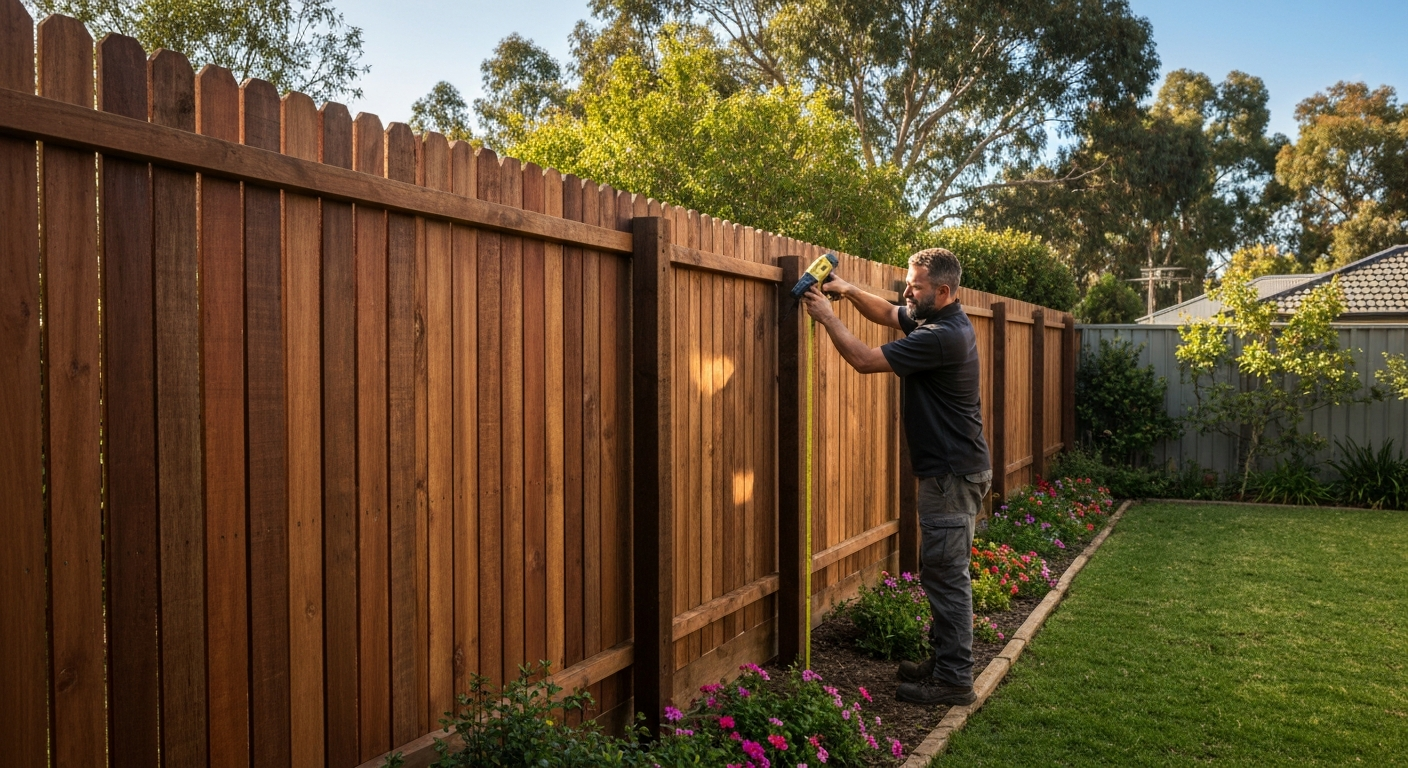
Wood fences have a type of sturdy appeal, yet they are often misinterpreted in a security conversation. A solid timber personal privacy fence can be exceptionally frightening to laid-back trespassers since it denies view lines into the lawn. It can additionally really feel strong when constructed with appropriate framing and high quality fasteners.
Where timber gets complicated is in the details. Protection isn't only about fence height; it's about the framework behind the boards. A fencing constructed with marginal bracing, loosened pickets, or hardware that doesn't manage dampness cycles can develop gaps, bowing, and weak points. Those are specifically the locations a person examinations first.
If you select timber for protection, focus on:
- solid framing and appropriate article setup depth
- tight board positioning, with very little spacing at susceptible points
- gate construction that matches the toughness of the rest of the fence
Pressure-treated lumber and high quality exterior-grade boards aid, however the real difference comes from workmanship. I have actually seen timber fencings that look the same from the road, yet one remains limited for several years, and the various other creates wobbles within periods. That "tightness" is what a burglar really feels immediately.
There is additionally an upkeep side to be truthful about. Staining, securing, or painting is not optional for life. If you want reduced maintenance, wood requires a plan. If you want the cozy look and don't mind periodic care, timber can be a strong safety selection, especially when you incorporate it with good illumination and a strong entrance latch system.
Vinyl and composite: strong privacy, very little fuss
Vinyl fence has expanded in popularity since it's foreseeable. It won't rot, it doesn't splinter, and it withstands the sort of wear that makes wood fencings soften gradually. For security, plastic's major advantage is that it holds shape much better when set up properly. That issues due to the fact that drooping and buckling produce utilize points.
Vinyl privacy designs can be extremely effective at limiting visibility, which reduces the "technique and extent the scenario" window for a person trying to test your house. Many plastic systems utilize interlocking layouts and more powerful rails than basic attractive styles, and those rails are what keep the panels rigid.
However, plastic is not magic. Fencing protection still relies on blog post spacing and proper anchoring. If blog posts aren't set properly or the gate is developed with weak equipment, you have not gotten protection, you have actually gotten appearance. Likewise take into consideration influence resistance. In areas with debris storms, landscape design tools contact, or kids that treat every little thing like a play area, vinyl can reveal splits or chips that you might not wish to deal with.
Composite products can share some of vinyl's benefits, depending on the item. They often tend to stand up to rot and can be helpful for long-term appearance. Still, composite strength differs by supplier, so it's worth choosing brand names that have a clear performance history for outside performance instead of going purely by price.
If you want a "set it and neglect it" protection fence, vinyl typically fits the expense, specifically when your main objective is personal privacy plus deterrence rather than a fortress-like barrier.
Aluminum: the safety and security appearance with a reduced upkeep promise
Aluminum fencing beings in a wonderful place for lots of home owners. It supplies a specified perimeter, good presence for monitoring, and a clean look that doesn't require continuous staining.
For safety, aluminum can be quite efficient when it uses solid rails and properly designed picket spacing. The open design is a plus if you have electronic camera coverage or you intend to keep sight lines for your own security. Somebody approaching in the evening still fencing installer Melbourne sees the limit, and you still see what's taking place beyond it.
That said, light weight aluminum is not inherently impenetrable. Its toughness remains in the framing and hardware. If you install aluminum with loose articles, poor supporting, or weak gate construction, it won't act like the "strong obstacle" people picture from a brochure.
In method, light weight aluminum tends to be a great choice when you want safety and security hints, monitoring, and weather resistance without the maintenance load of wood. It works especially well for front backyards where you need compliance with aesthetic appeals, and for side lawns where visibility matters.
Steel and functioned iron: when you want the "major" barrier
If you're considering safety in a much more aggressive way, steel and functioned iron bring a different degree of intimidation. The most effective variations are hefty, stiff, and hard to relocate. When individuals claim a fencing really feels "strong," it commonly comes down to steel mass, blog post depth, and entrance engineering.
Steel can be fabricated with variants that stabilize visibility and resistance. Some systems consist of decorative elements that still behave structurally, and others are developed for maximum safety with tighter spacing or reinforcement.
Wrought iron, specifically, has a timeless presence. It likewise permits style adaptability while maintaining strength. The big demand is corrosion protection. Powder finish assists, and proper construction and setup matter, particularly around joints and gateway systems. If you live in a coastal setting or near frequent snow melt chemicals, the covering high quality and upkeep plan end up being a large deal.
The one compromise that frequently shocks property owners is expense. High-grade steel or iron is hardly ever the most affordable course. However if you have a home design where fencing stamina directly influences your daily peace of mind, the investment can feel justified fast.
There's another subtle variable: hard obstacles can change focus to entrances and lock points. If your gateway is weak than the fencing, an intruder will examine eviction location initially. That's true throughout materials, but it ends up being extra visible with metal systems since individuals presume gates are robust. Make sure your gate layout is engineered for the very same stress and anxiety, not just for looks.
Picking the very best material for your protection priorities
Security is not one-size-fits-all. A material that succeeds at deterring a laid-back border intruder might not be excellent if your greatest danger is device gain access to, fencing cutting, or duplicated efforts to require a gate.
Here's a functional means to match products to your top priorities:
- If you desire perimeter insurance coverage with presence and you're enhancing for tracking, chain link or light weight aluminum frequently make one of the most sense. They function well around electronic cameras and illumination because view lines remain open.
- If your objective is personal privacy plus prevention, timber and plastic can radiate. They limit technique and hunting, and they can make an intruder feel subjected when they attempt to obtain close.
- If you desire optimal resistance and you want to spend for much heavier construction, steel or wrought iron are the serious contenders.
But you still require to take into consideration neighborhood problems. Wind can worry high panels. Dirt problems affect blog post stability. In some environments, consistent freeze-thaw cycles speed up equipment failure, also when the panel product appears durable. The fencing's "system honesty" is what matters.
In my experience, the best results happen when the property owner believes in terms of the whole assembly, not just the fencing product. A solid fence company will talk via blog post deepness, blog post spacing, tensioning approaches for cable, rail density, and gate support. If they just talk about looks, you need to ask more questions.
The assembly information that choose whether a fence in fact protects the property
It's simple to consume over the panel material and miss out on the components that regulate actual strength. Protection comes from the framework that holds the fencing with each other over years of weather and abuse.
Consider these system-level factors that affect safety and security performance throughout materials:
Post installment is everything. A fence can look thick and expensive, however if posts are set shallow or in bad backfill, the whole system can loosen up. A burglar does not require to "ruin" a fencing to gain access, they simply need to locate weak activity points.
Corner and gateway building are worthy of special attention. These sections experience more pressure than straight runs. Several fences fall short at corners first due to the fact that the equipment bends, rails loosen, or the supporting approach is underbuilt.
Bottom spaces matter. If your fence leaves room along the ground, a person can creep below, and pets can press via. Also if you're not bothered with individuals tunneling, voids transform just how landscaping grows in and just how quickly the fencing becomes uneven.
Gates are the real test. Gate hinges, latches, and positioning decide whether the opening remains regulated. I've seen instances where the fencing looked durable, however eviction latch was a simple target, or the gate sagged sufficient to produce a controlled gap.
Material comparison for usual safety goals
Instead of dealing with each fencing type as a solitary product, I believe it's better to link them to protection results. Below is a quick, straightforward map of what each product often tends to do best, in normal property installations.
|Fencing product|Protection staminas (normal)|Usual trade-off||-- |-- |--|| Chain web link|Good prevention per buck, solid presence|Much less personal privacy, needs high quality tensioning and blog posts|| Timber|Privacy and solid feel, obstructs view lines|Needs upkeep, can loosen if framing is weak|| Vinyl|Maintains shape, reduced rot risk, privacy designs|Depends greatly on blog post and gateway equipment top quality|| Aluminum|Presence with specified border, rust resistance|Less "strong block" sensation than wood or steel|| Steel/ functioned iron|High strength, solid deterrence|Greater price, requires coating stability and gateway engineering|
That last column is necessary: compromises are not factors to prevent a material, they're cautions concerning where to spend attention.
If you want a fence that stays secure in genuine usage, the "where to invest interest" factor typically arrive on gateways, corners, and the user interface in between fence and ground.
A few real-world circumstances (and what product I 'd favor)
I'll inform you three circumstances I have actually seen consistently, because they show how "best" adjustments with context.
Scenario one is the backyard with fully grown landscaping and solid lighting on the residence side, however a darker limit line. Individuals desire personal privacy from neighbors and intend to slow down entry from the side gate. Because configuration, a privacy-focused fencing like timber or vinyl can work extremely well since it rejects view lines while the house illumination deals with surveillance. The method is to make sure eviction is developed with the exact same strength which the lower void is addressed.
Scenario 2 is a larger building with video cameras and a driveway path where visibility matters. Property owners want a clear border they can check and regulate, and they don't intend to keep hefty materials regularly. Chain link or light weight aluminum tends to fit here. Their openness supports cam sights and decreases the opportunities that someone can come close to unseen. You're also much less likely to regret it when you see exactly how the fencing cares for a few seasons.
Scenario 3 includes duplicated nuisance attempts, installers Melbourne not always advanced breach, however sufficient to make every person nervous. This is where steel or wrought iron comes to be appealing, or where a durable entrance layout makes a dramatic difference. Occasionally the panels can be additional to the gate and lock top quality, however the psychological impact of an inflexible, crucial obstacle is real. Individuals test borders by instinct, and steel frequently sends out a clear message immediately.
Questions to ask your fence company prior to you commit
A trusted fence company need to invite these concerns. If they dodge them, that's a clue.
Ask regarding article depth and spacing, and whether they're complying with a technique that fits your dirt kind and fencing elevation. Ask exactly how they deal with edge bracing and just how they craft gates so they will not sag. Ask what equipment they utilize for latches and pivots, and whether it's ranked for the climate you're in. Ask how they resolve bottom voids and how they make certain the fencing remains right over time.
If they respond with specifics, like the means they establish posts, the type of brackets, or just how they deal with stress in chain web link, you're in good shape. If they only talk about the visual surface, you might be taking a gamble.
Also, check regional guidelines. Height restrictions, presence requirements, and product restrictions can vary. Code conformity affects what you can construct, which impacts safety and security performance. A terrific fence that you can not legitimately set up is simply costly homework.
How to choose without getting caught by budget
Budget is genuine. Protection materials differ in cost, and installment labor often controls the complete expense, particularly with gateways and bracing.
A common mistake is buying the least expensive panel product and costs nothing on the sustaining structure. That approach can backfire. The material could endure the weather condition, yet a weak structure can still produce openings. If protection is the objective, you usually wish to invest sufficient on the elements that avoid activity: blog posts, rails, bracing, and gate engineering.
Here's the means I 'd prioritize investing in most safety and security fence constructs:
- First, make certain the fence can hold up against wind and stress without loosening up. That originates from article deepness, appropriate bracing, and ideal hardware.
- Second, designer the gate like it matters, because it does. A solid gate lock and straightened framework are frequently more important than selecting between two comparable panel types.
- Third, choose the panel product based upon your privacy and presence requirements, and your maintenance tolerance.
Your climate and way of life figure out exactly how that top priority order need to shift. If you're away frequently, keeping an eye on may matter more. If you have kids or pets, bottom gaps and gateway dependability come to be non-negotiable.
Quick safety build checklist before install
Use this as a quick peace of mind check. If you can respond to these well, you're likely obtaining genuine safety and security instead of a fencing that looks challenging however acts loose.
- Confirm message depth and spacing match your fencing height and regional conditions.
- Make gateway support and lock equipment a stated part of the scope.
- Address bottom clearance so there are no purposeful crawl-through gaps.
- Use proper corrosion defense based upon your climate, specifically for metal.
- Plan for upkeep gain access to, even if the material is "reduced maintenance."
That list alone can conserve you from one of the most typical safety disappointments, the ones that appear after the very first tornado, the first difficult wintertime, or the very first period of settling.
Maintenance truths that affect long-term security
A safety and security fencing is only comparable to its problem. Upkeep isn't nearly visual appeals, it's about architectural integrity.
Wood needs attention since moisture is a consistent. Loosened boards become access factors. Deforming can create voids, and equipment corrosion can deteriorate lock efficiency. Plastic normally needs less, however impact damage still occurs, and tiny splits can come to be bigger over time otherwise addressed.
Metal fencings call for focus to finishes and joints. If you damage with a powder layer, rust can start at a joint. Chain link can create sag if it sheds stress or if blog posts resolve. When chain link begins to look uneven, it typically signals that the tension system or article stability needs correction.
In all situations, the very best maintenance is early. If you observe a fencing leaning a few degrees, or an entrance that drags in a different way, do not await it to become a repair service project. Tightening up and adjustment early can stop a full replacement later.
Where style in fact matters for security
Style might feel shallow, yet it influences security. As an example, personal privacy fence designs obstruct view lines, which can discourage informal intruders. The very same privacy can be a disadvantage if you depend on cameras or you want a clear view for lights control.
Open picket layouts like light weight aluminum can boost monitoring, however they additionally produce aesthetic accessibility. Some house owners solve that by combining open fencings with landscape design that does not block exposure near video cameras and entrances.
For chain web link, privacy slats can boost deterrence and minimize presence. Simply keep in mind that slats can likewise develop wind resistance. That can matter in high wind locations, where the fencing's stress and post stamina should manage the additional load.
Security fence resembles trail style. The best results come when you engineer the experience from multiple angles, not when you rely on one significant feature.
So, what's the very best fence product for security?
If you required me to select an answer without information, I 'd say the "finest" security outcome originates from matching worldly strength to your gate design, article system, and your monitoring needs.
If you desire exposure and border control with dependable efficiency, chain link and aluminum are commonly the most functional victors. If you desire privacy-based deterrence and you're gotten ready for regular upkeep, timber and plastic can be exceptional. If you want a hefty, inflexible obstacle and you're focused on optimum resistance, steel or functioned iron commonly supplies the toughest first impression and the most stubborn obstacle behavior.
The actual key is not the product label. It's the fence company you employ and the level of care they apply to the setting up. A top-tier chain web link installation can outmatch an inadequately built steel personal privacy fence. A well-framed timber fence with limited gate positioning can be more secure than a decorative aluminum job with loose bracing.
Security is not a guess. It's a system you can examine before you ever before pay the last invoice.
If you're planning your job, inform your fence company your major danger and your top priorities, privacy versus visibility, and exactly how you utilize your backyard day to day. After that ask what they're doing structurally to address gain access to factors. When those responses are specific, you can feel confident you're developing a boundary that really secures, not just one that looks safe and secure from a distance.